RGS16
RGS16 (Regulator of G-protein Signaling 16) is a member of the R4 subfamily of RGS proteins that accelerates GTP hydrolysis on Gα subunits and thereby terminates or constrains GPCR signaling outputs[1][2]. Mechanistically, RGS16 regulates classical GPCR pathways and also influences downstream signaling networks including MAPK, PI3K/Akt, RhoA, and SDF-1/CXCR4 pathways, linking receptor activation to immune, inflammatory, metabolic, and tumor-associated biological processes[1]. In metabolic models, hepatic RGS16 expression is induced during gluconeogenic states and provides a mechanism through which glucose production suppresses GPCR-stimulated fatty-acid oxidation, highlighting a role in energy homeostasis[3]. In pancreatic islets, RGS16 functions as a regulator of β-cell physiology by attenuating inhibitory Gαi/o-dependent somatostatin signaling, thereby promoting cAMP accumulation, insulin secretion, and β-cell proliferation in both rodent and human systems[4]. RGS16 also contributes to circadian regulation, where it is required for cAMP control within the suprachiasmatic nucleus and is linked to GPCR-mediated clock signaling mechanisms[5]. Compared with related RGS isoforms, RGS16 belongs to the small R4 family but displays distinct G-protein selectivity and signaling interactions that contribute to nonredundant biological functions across tissues[2]. For experimental applications, modulation of RGS proteins is widely explored as a strategy to control GPCR signal transduction, making RGS16 a useful target for mechanistic studies of metabolism, immunity, circadian biology, and disease-associated signaling networks[1][6].
Verweise:
- [1]. Tian M, et al. Functions of regulators of G protein signaling 16 in immunity, inflammation, and other diseases. Front Mol Biosci. 2022 Sep 2;9:962321. [Content Brief]
- [2]. Masuho I, et al. A Global Map of G Protein Signaling Regulation by RGS Proteins. Cell. 2020 Oct 15;183(2):503-521.e19. [Content Brief]
- [3]. Lee MJ, et al. Time to HIV rebound after infusion of long-acting broadly neutralising antibodies 3BNC117-LS and 10-1074-LS and analytical treatment interruption (the RIO trial): a double-blind, randomised, placebo-controlled trial. Lancet HIV. 2026 May 27:S2352-3018(26)00059-7. [Content Brief]
- [4]. Vivot K, et al. The regulator of G-protein signaling RGS16 promotes insulin secretion and β-cell proliferation in rodent and human islets. Mol Metab. 2016 Aug 26;5(10):988-996. [Content Brief]
- [5]. Goto K, et al. G-protein-coupled receptor signaling through Gpr176, Gz, and RGS16 tunes time in the center of the circadian clock [Review]. Endocr J. 2017 Jun 29;64(6):571-579. [Content Brief]
- [6]. Roman DL, et al. Regulators of G protein signaling (RGS) proteins as drug targets: modulating G-protein-coupled receptor (GPCR) signal transduction. J Med Chem. 2011 Nov 10;54(21):7433-40. [Content Brief]
All Product Categories
-
RGS16 Verwandte Produkte (2)
Verwandte Produkte (2)

-
CCG-50014
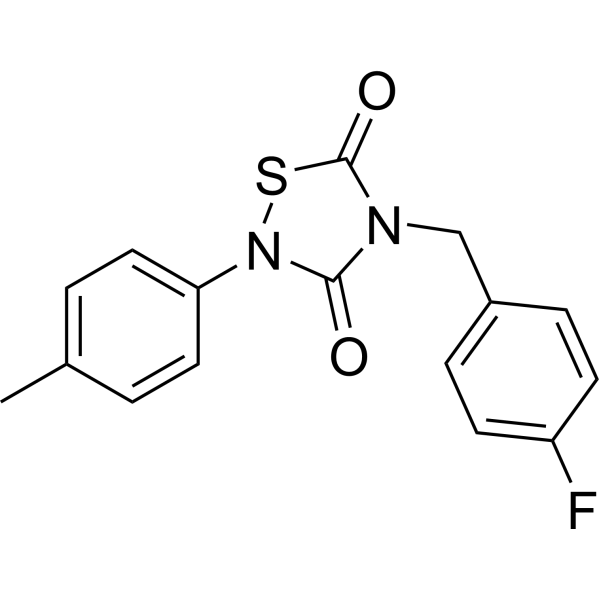 0 ImagesCCG-50014 is the most potent against the regulator of G-protein signaling protein type 4 (RGS4) (IC50 =30 nM) and is >20-fold selective for RGS4 over other RGS proteins. CCG-50014 binds covalently to the RGS, forming an adduct on two cysteine residues located in an allosteric regulatory site. CCG50014, reduces nociceptive responses and enhances opioid-mediated analgesic effects in the mouse formalin test.